The EEBO Trap

Foxetrap

I’m in the midst of digging through “Early English Books Online” (EEBO) to download research items for this pesky wee paper I have to write. I keep getting sidetracked – trapped, if you will – by woodworking things.

Case in point: a fascinating book on, among other things, angling, that shows how to make various and sundrie [sic] traps from wood: “A booke of fishing with hooke & line, and of all other instruments thereunto belonging. Another of sundrie engines and trappes to take polcats, buzards, rattes, mice and all other kindes of vermine & beasts whatsoeuer, most profitable for all warriners, and such as delight in this kinde of sport and pastime,” by Leonard Mascall.

These look downright medieval…but they’re actually early modern – or at least the book is: 1590.


Posted in Books/Editing/Writing, Uncategorized | 4 Comments

Three Drinks has me Thinking ‘Ikea’

night1

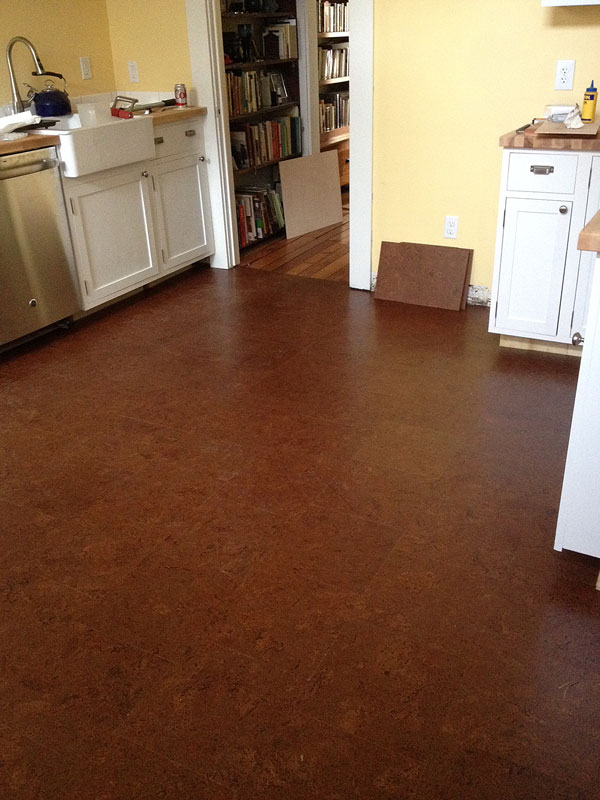
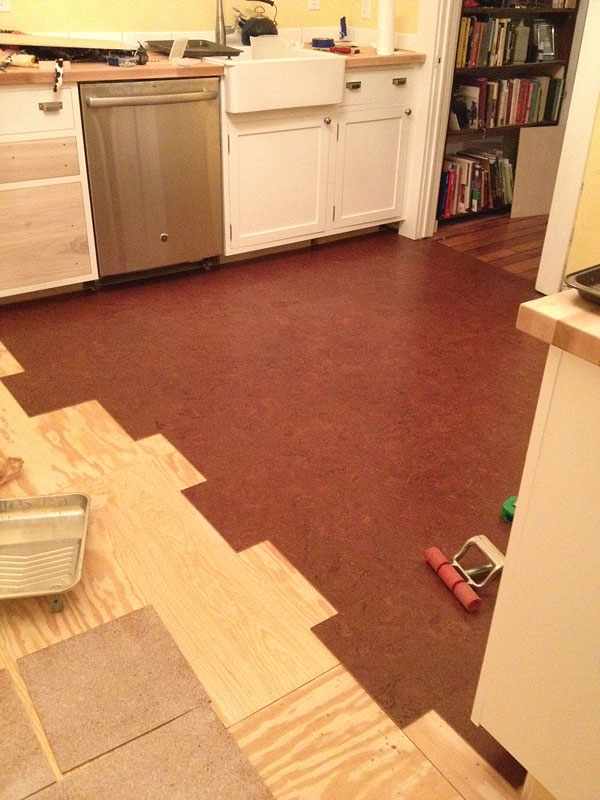
Last night, after completing various neighborhood pet-sitting duties and setting the backsplash tiles, I decided to get over my first-timer’s fear and start in on the cork tiles. That was at 10 p.m. I got as far as you see above by about 1 a.m., and called it a night.

I was cutting it close on my tile supply from the get-go, because I didn’t want to pay for another entire box. But by my triple-checked calculations, as long as I made no more than a couple mistakes, I’d still have 15 or so 12 x 12 tiles left over. I did not, however, remember my daring tile order when I decided against a cabinet to the left of the stove.

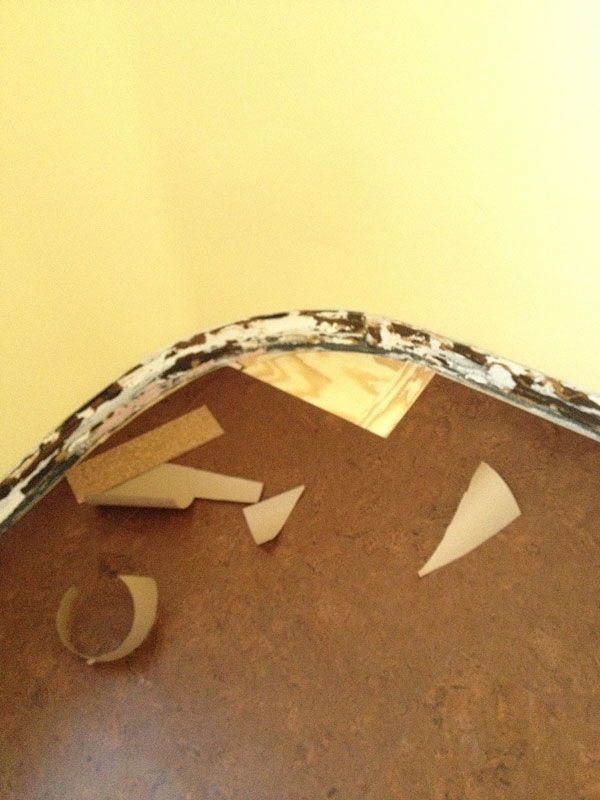
This curved corner was fun. I cut paper templates, then traced around them onto the cork with a sharp utility knife.

This curved corner was fun. I cut paper templates, then traced around them onto the cork with a sharp utility knife.

At 1 a.m. Saturday morning, I wasn’t sure I’d have enough. And the store where I got my supplies is open on Saturdays from 10 a.m.-1 p.m…plus the tiles would have to be ordered, and it’s a holiday weekend. So at 6 a.m., I was back at it; I wanted to know quickly how pissed off I was going to be at myself for the next several days. (And I wanted to get my order in ASAP, if needed.)

Luckily, in large part because of the square footage not being evenly divisible 12, I had a fair number of rip cuts to make that resulted in scraps that were large enough to use against other walls/doorways/bases/etc. (Except is it really lucky to have had to fiddle so much? No. No it is not.) When all was said and done, I had four full tiles remaining – a very close call.

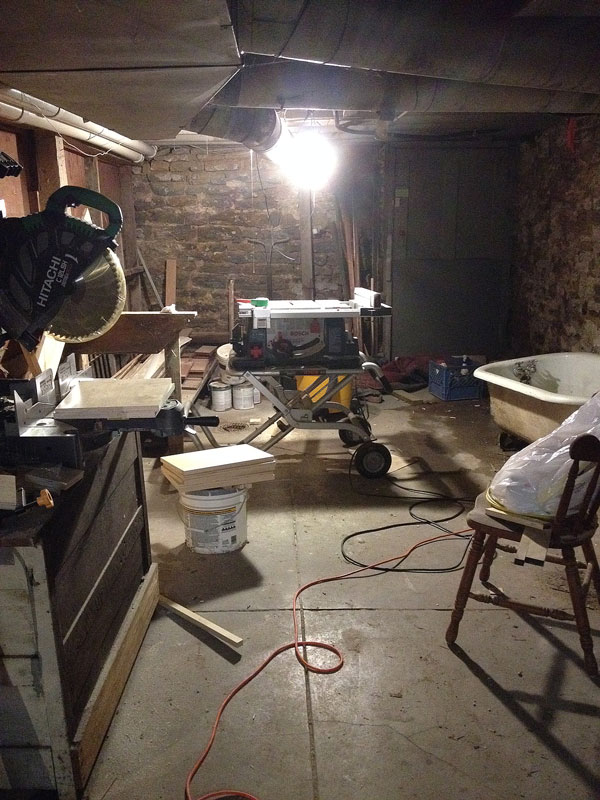
Cork is easy to cut; a sharp utility knife can make it through in three to four passes – which is good, because I’ve a pesky curved corner that no table saw could handle. For the many straight cuts, the table saw works like a charm. As much as I hate going up and down to the scary basement and as bad as the light is at my saw, that little Bosch saved me a lot of time.

stringing

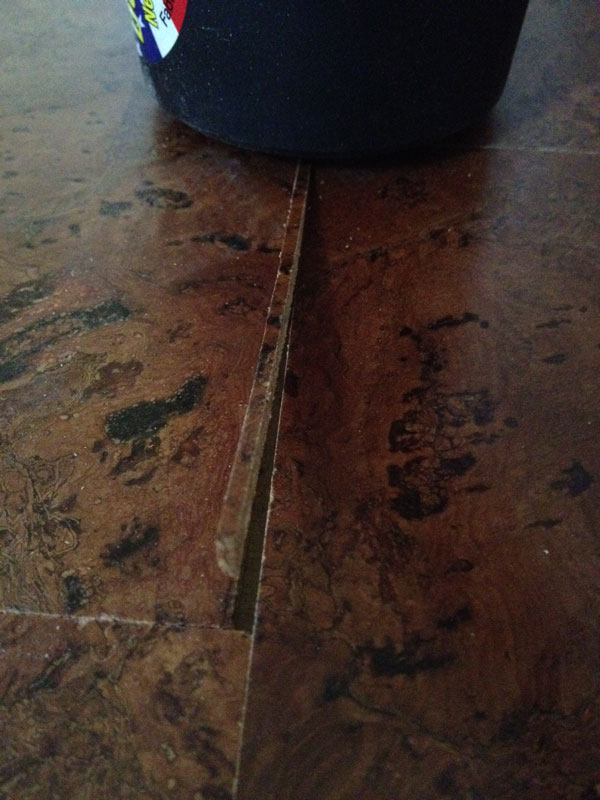
Got a small gap? Think string inlay (in the same species, color and pattern).

It also came in handy in helping me to fix a wee problem. Somehow, I got a little off on a few tiles, which resulted in having to fill narrow gaps in a few places at the staggered joints. On the table saw, I was able to rip 1/16″-wide strips off the springy cork (I backed it with 1/4″ ply so I didn’t lose the tiny offcut), and tap them down into place. It’s rather like string inlay – with the notable exception that I don’t want the strips to stand out. And they don’t. After two coats of waterborne poly (Bona “Traffic”), they’ll not show even less.

Cork is also pretty easy to install. The adhesive I used has a three-hour open time (if you coat the floor and the tiles at around the same time; if you pre-coat the tiles, the working time drops to an hour with the floor’s adhesive). I rolled the stuff on both (working with about 12-15 tiles at a time, and coating the appropriate area of underlayment), waited for it to turn clear(ish) and dry to the touch, then defended the prep against cats while the adhesive flashed. Then, it was just a matter of aligning the first one with the chalk lines I’d dropped near the sink, and working my way out, pounding each in place with a rubber mallet. Each row is staggered 3-1/2″ from the previous one. (No real reason other than it looked good to select 3-1/2″.) After every 12-square-feet or so, I used a J-roller on the joint lines.

Other than those few aforementioned gaps (an easy fix), I’m pleased with how it turned out. And delighted to not have to wait for another box of cork tiles to arrive. But I do still have to screen it and apply the two poly coats (a 2-day process).

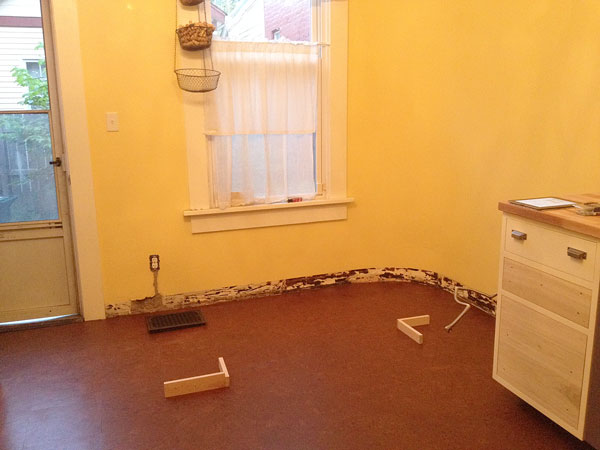
The sticks to the right of the window denote the corner of the stove; the center ones denote the proposed island location relative to the wall and stove.

The sticks to the right of the window denote the corner of the stove; the center ones denote the proposed island location relative to the wall and stove.

And that got me thinking about everything else that’s left to do…so I had three drinks with dinner, in an effort to make myself take a break, because I’ve been working on the kitchen almost non-stop (but for work) for weeks…months. I just need a few hours of not working. (Though I’m pretty sure I could grout whilst tipsy.)

There’s still a minor wall repair to make where my neighbor moved an outlet up above the baseboard line (thank you neighbor…I just didn’t have the time), baseboards to run and install (including a kerf bend around the curve), a countertop-height table with a curved top to fit in to the left of the stove (I hate that curve), three drawers still to paint and their hardware to install, the backsplash tile to grout and a kitchen island to make. It’s that last one that has me thinking Ikea. I can only assume it’s the alcohol talking. I might just listen.

finished


Posted in Kitchen, Renovation/Restoration | 13 Comments

Reality=Concept (Amazing)

fromleft

Many of my ideas in execution prove insane, insanely expensive or so far beyond my skills that they’re risible. This was not among them.

Happy day.

Now I need some herb swags to hang from the pegs.

I was going to post a “how-to”… but no time today; I have floor tiles to install, cabinets to paint and a dissertation on which to work. Plus, this is a nice, simple project for PW readers. So if you’re interested in step photos etc., read this post on the PW Editors’ Blog.

Posted in Woodworking | 9 Comments

Plasterwork & Pot Rack

Wallwhole

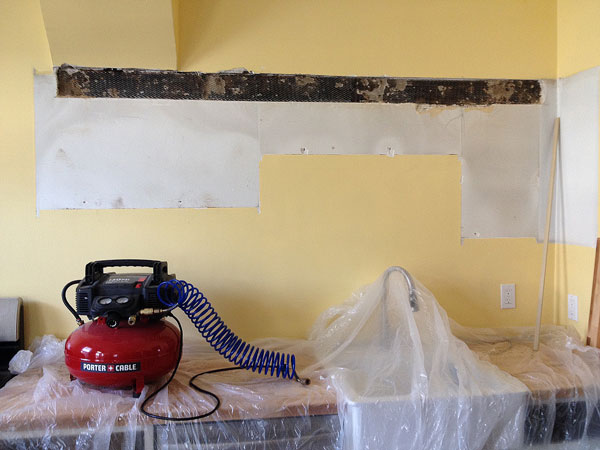
I decided some time back that, despite my original plan, I didn’t want cabinets over the sink. Once I removed the old ones (only to reveal yet another an unexpected repair project), I liked the open feeling and how much larger the kitchen seemed. Plus, I already had a lot more storage in place. (And perhaps – just perhaps – I was tired of making plywood boxes.)

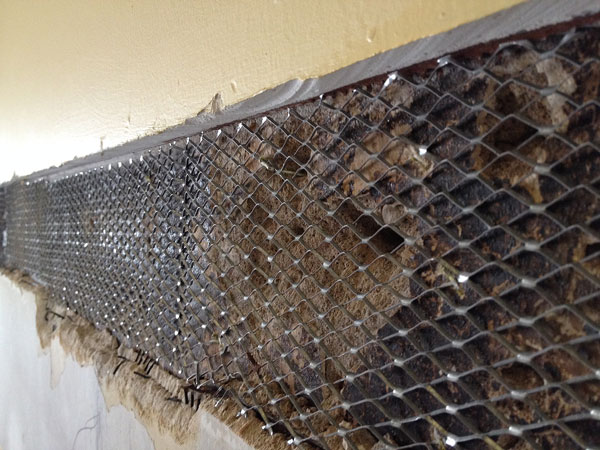
wallwirepatchSo after stapling up some wire mesh, I mixed up some plaster and sand for a first coat, because that dries a great deal more quickly than straight-up plaster. After slapping the stuff into the bulk of the patch, I went back over it to make sure I inset the sand/plaster mix below the finished face of the wall; were it to protrude or be even with the surrounding surface, the sand would make the topcoat more difficult to get smooth. So I erred on the side of caution; it was actually two coats of straight-up plaster to get the patch smooth, looking good and flush with the existing wall. Then, I primed and painted.

wallfinished

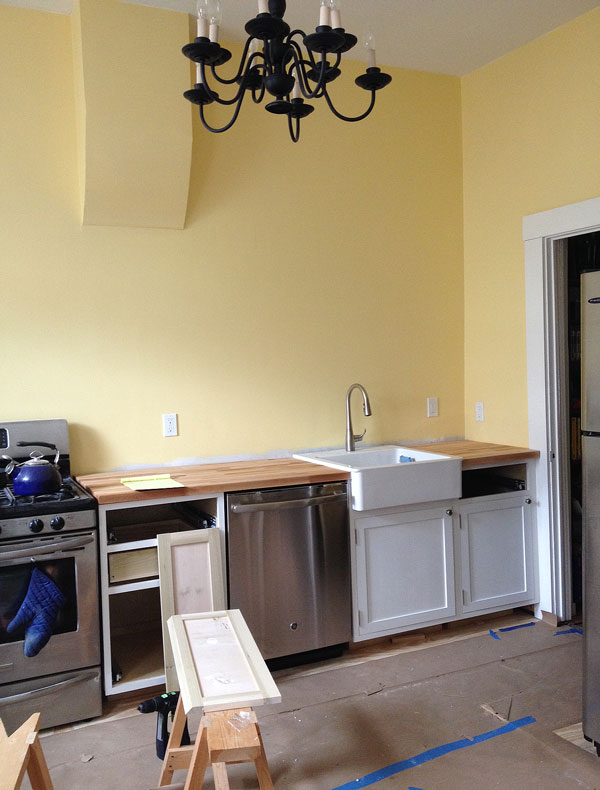
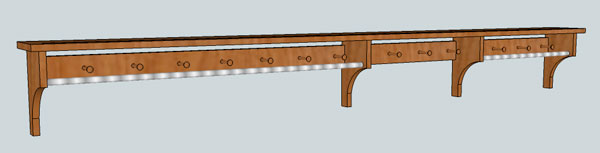
But that’s a whole lot of yellow in a whole lot of what looks like wasted space. So here’s the plan: A Shaker-inspired peg/pot rack that runs just below that pesky chimney bump-out from the stove edge of the counter to the wall. I’m thinking maple with a natural finish, with a 3/4″-diameter stainless steel rod between the left counter edge and the sink, and  picks up again for the short run from the sink to the wall. (Seems like a bad idea to hang heavy things over a porcelain sink…and anywhere, that’s where the clock goes.)

On it, I’ll hang just a few pots – more decorative than necessary, really. I now have all but one drawer finished, and more than enough storage space.

But I’ve some concern that the rack will cut the room in half…as did the old cabinets. So I might run a simple peg rail up above it just to break up the area (whether it’s with or without a shelf remains to be seen), then hang another one next to the back door for visual balance in the room. And for coats, natch.

Here’s my quick sketch. While the other components and design are subject to change, the stainless is a definite; it was delivered today.

ShakerPegRack


Posted in Kitchen, Renovation/Restoration | 11 Comments

Pretty; Pretty Costly

clematis

Yes, I should have dovetailed a couple more drawers this morning, but I wanted a few hours of doing nothing with woodworking, my kitchen or early modern drama (yes, I’m actually working on my dissertation again, and time is short for me to complete and defend it…terrifyingly short, in fact).

So this morning I dropped far too much cash on my other hobby: gardening.

My yard, for the aforementioned reasons, has been woefully neglected this spring; it looked sad…and a bit scary. I’ve had a climbing rose on a trellis and wires between the windows on the front of the house for the last decade. It was about 20′ tall, and looked just gorgeous in the spring, then again in the fall with a second bloom. But last winter killed it, so for several months I’ve had a 20′-tall dead thing climbing up the front of my house.

After many scratches, countless embedded thorns and almost falling out of a second-story window, I got the poor thing cut down, dug up and bagged for yard-waste pickup.

The house looks naked.

Whilst dodging raindrops, I replaced the late rose with a clematis that will grow (according to the tag) to 8′-10′ tall; at the moment, it’s but 18″ tall, with one lonely looking climber and a few blooms at ground level. Around it, I transplanted some Sweet Woodruff from the corner of the yard, and planted three Scotch Moss plants (I plant those almost every year…and almost every year they die. I never learn).

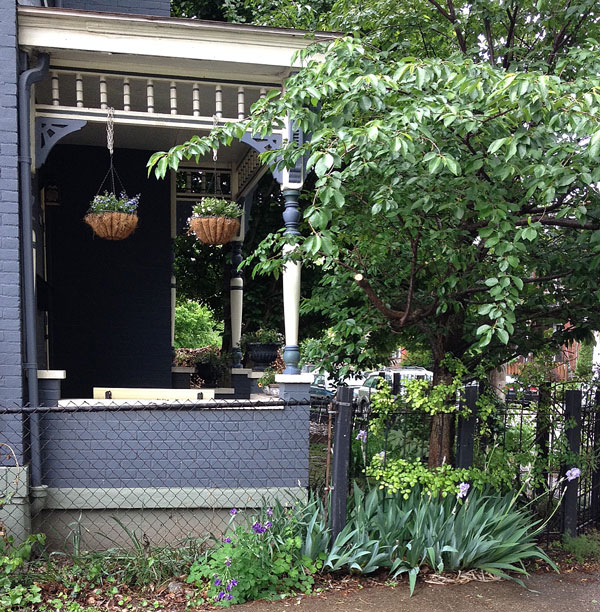
But the bulk of my time and money was spent on annuals and herbs for planters on my porch. I find it soothing to come home to lots of blooms and various herbs suitable for  helping to create a delicious meal. (I never actually use the herbs.)

There are still three pots to populate, and a scar of bare patch in the tiny yard; I want the Scotch Moss to spread and take over there. But it won’t, because it will die. Again.

porch

And I suppose I did actually do a bit of woodworking; I cut back the ornamental cherry so the sun can get to my hanging baskets.

Except that there is no sun today. The rain is now coming down in earnest, so I guess it’s back to the books, the remaining four drawers or both.

sideporch

p.s. I need a tallish perennial(s) to plant under the right front window alongside a puny, low-growing hydrangea (which might do better now that the rose isn’t sucking up all the sun and soil nutrients) and possibly some lower-growing something or others in front of them. I do only blue, yellow or white and don’t really like shrubby things. Any suggestions? (Zone 6, well-drained soil – that could use some amendments – and late afternoon sun.)

p.p.s. Yeah, I’m still planning to sell the place, but I figure the plants add curb appeal. And anyway, I just like them.

Posted in Uncategorized | 5 Comments

Dovetailed Drawers: No, I’m not Insane

DTs

Several people have called me insane/crazy/foolish and other mild epithets after I posted a picture on Twitter of the first kitchen drawer I completed. Why? Because it’s hand-dovetailed.

Sure, I could simply rabbet and nail the kitchen drawers together, but hey – the math is harder. But one good reason for eschewing that method is that I can’t easily do it at home. No, that’s not true – I could easily do it at home using hand tools. But I don’t imagine I can more quickly plane rabbets than I can cut through-dovetails of just three tails per corner (poplar is awfully forgiving).

So why not use a router dovetail jig? Well, I don’t own a router dovetail jig. Sure, we have one at work…but I spend enough time at work already. Also, the router and I have a love-hate relationship; I recognize the tool’s efficacy in many situations, but I don’t like using it unless it truly is the best tool for the job (say, pattern routing). It’s loud and messy, and I can never find the bit I need. Oh – and there’s the wee issue that I don’t know how to set up a router dovetail jig. For a mere nine drawers, it doesn’t seem worth the trouble to learn (or really, worth the trouble of digging the jig out of our storeroom and finding all the parts).

But here’s the real reason: I need the practice. I’m a competent dovetailer…usually. But a piece of white oak kicked my ass last week and it’s haunting me. Cutting a few good sets of joints in poplar has made me feel (a little) better.

And while my joints are perfectly serviceable, they’re nowhere near perfect. So with these drawers, I’m working on small things including shaving a few minutes off my time, trying to get through the waste with fewer mallet whacks, and doing my best to cut closer to my baseline with the coping saw. A certain someone I know gets so close that he can, after coping out most of the waste, drop his chisel right into the scribeline and finish the cut. Me? I usually have to halve my way back to the baseline in at least two steps. So I can do better.

Also, the bourbon is right downstairs when I’m done – and so is the kitchen, into which I can install each drawer as soon as the glue is dry (which is about how long it takes me to drink a glass of bourbon). Instant gratification on two fronts.


Posted in Uncategorized | 18 Comments

The Mighty Wedge Wins

wedge

I’m working on a “Woodworking Essentials” article on nails for Popular Woodworking Magazine, and along with forged nails and wire nails, I’m writing about cut nails – you know, the wedge-shaped variety we often recommend in the magazine, because they hold better in wood than the round ones (and you can clinch/clench them).

But I’m distracted by masonry nails (same shape, hardened material) and my experiential knowledge that they, too, exert a death grip.

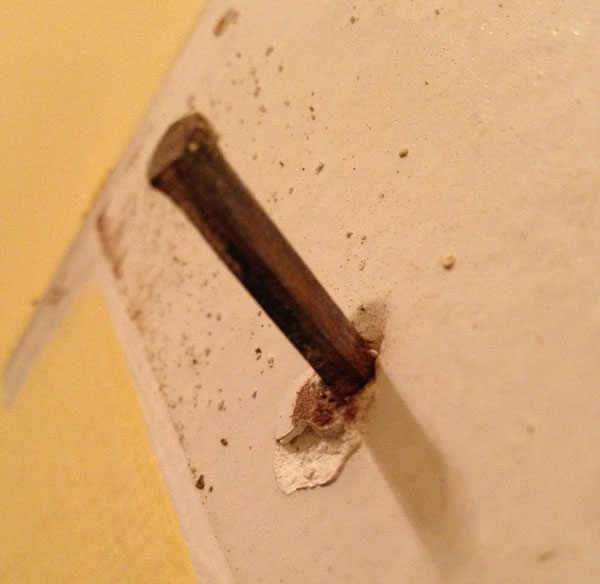
Though I removed the last of my old cabinets weeks ago, three of the masonry nails that affixed them to the wall stayed behind. I simply cannot budge them, no matter how many different tools I try. (And neither can my several strong neighbors who’ve been properly humbled after making fun of me then also failing.)

So – unless I remove a fair amount of plaster around each nail, which I don’t want to do – I’m afraid I’m going to have to cut them off flush with the wall, try to knock them just below the surface then do my best to patch over the damage.

Wedges are great…until they’re not.


Posted in Uncategorized | 17 Comments

Poor Penmanship Bites me in the Butt

pinningsmall

My penmanship is unutterably atrocious, and today, I paid for it. I’d written down “36-13/16″” for the height of the plywood in the doors for the upper cabinets. And (despite my dyscalculia) my math was correct (I quadruple checked it). What I didn’t confirm was that I was correctly reading my own ugly scrawl. So instead of cutting six 36-13/16″ panels, I cut six 36-3/16″ panels.

My left hand was hella cramped from exerting downward pressure for the grooves. Wah.

My left hand was terribly cramped from exerting downward pressure for the grooves. Wah.

I did not, of course, realize my mistake until I was gluing together the first door. And, perhaps foolishly, I’d prepped, cut and grooved only enough stock for the six doors, with a couple extra lengths of material in case I messed up, say, one stile and one rail…but not four pieces. With wet glue on my tenons, I was kinda screwed. And in addition to prepping and cutting more stock, I didn’t relish the idea of futzing with the setup for the grooves and tenons again.

Sure, I had more plywood…but in a full sheet. To rip it required setting up an outfeed table (what can I say…my armspan is too short) and moving a few items out of the way, then setting up the crosscut sled. No way was I going to safely accomplish that in the 10-15 minutes open time on my glue.

I managed to adjust the too-short panel until I had an end barely inside both the top and bottom grooves, then I pinned it in place along the sides. Good thing I used ply, I guess; hoping that won’t move much. At least not until after I’ve sold the place.

So, I had to recut the remaining five panels. What a waste of time and materials – all because I can’t read my own handwriting.

Despite that frustration, overall, it went well. I have only a few adjustments to make with a jointer plane, then comes the fun of hanging the doors, unhanging the doors, painting the doors and rehanging the doors.

And then there’s the drawers. But the runners are all installed (Blum Tandem w/Blumotion*), and I figure that was the hard part. Building the boxes should be easy…as long as I can read my writing.

doors

*What a silly “word”

Posted in Uncategorized | 12 Comments

Into the Mouth of Hell

Basement-steps

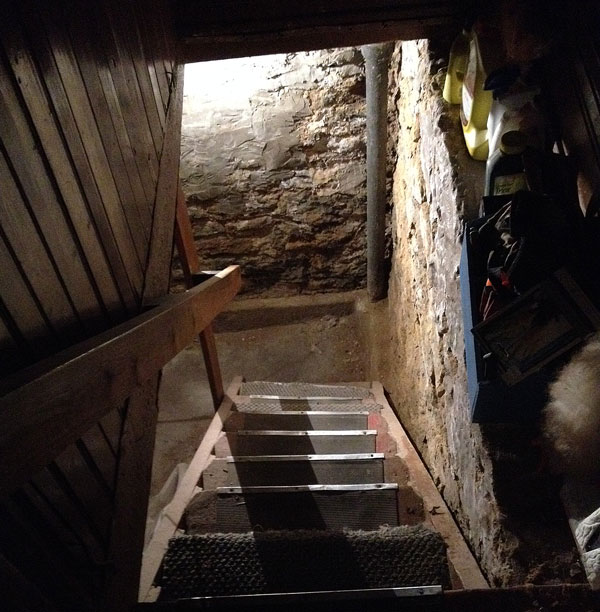
OK – the headline is perhaps a bit hyperbolic – but that’s how I feel every time I have to descend to the stygian depths of my basement to use my table saw and chop saw (or do laundry, for that matter).

During lunch yesterday, I glued up the shelves for my upper cabinets (plywood with a 1″ strip of maple on the front), but I miscalculated the clearance for the shelf supports by about 1/16″. Ugh. That meant a trip below (I didn’t want to plane down by hand a) plywood and b) 10 shelves).

No natural light (that door is a bitch to get open, and it’s at the bottom of a steep stairwell that seems to act as a black hole), a damp floor and walls with even the threat of rain (so I wipe with oil the blades and other metal bits of my power tools every few days), few outlets (so lots of extension cords over which to trip) and a dank, earthy smell. (The cast iron bathtub is a nice touch, eh?).

This – more so than my hand tools sharing a room on the second floor with my computer – is a major impetus for wanting a new home with room for a proper shop.

basement

Posted in Uncategorized | 20 Comments

More Cabinets: Yes or No?

stilllife

Still life with coffee…or how to get sawdust in your coffee. (The miter box and saw were kindly loaned to me by Christopher Schwarz.)

Oh…my aching bones.

On Saturday, I spent most of the day painting the face frames I installed weeks ago, and making, fitting and painting the face frame for the sink and adjacent cabinet – and that one was quite the puzzle.

The sink wraps around the front of the cabinets and there’s a rail across the front to hide the metal sink support; the far edge of that run is against the wall. So there was simply no way to assemble the entire frame ahead of time and slide it into place. So I had to…horror of horrors…nail some of the pieces together. I realize that had I used loose tenons I might have had an easier time with that particular assembly – but I decided on pocket screws, which for most of what I need to make has been an expeditious choice. (Go ahead and mock me; I can take it.)

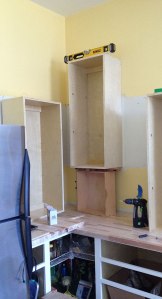
UppersoncounterAnd after that little adventure, instead of watching the paint dry, I got to work assembling the upper cabinets for the interior wall. ‘Round about midnight, I opted to sleep instead of trying to hang them (an easy decision, because I didn’t have any long enough screws on hand. Oh yeah – and I was exhausted).

So this morning, after a pot of coffee and a handful of ibuprofen, I wandered around my house looking for something – anything – that was 18″ tall and stable enough to serve as a platform while I hung the cabinets (hard to find good help on Easter Sunday…and anyway, I’m awfully stubborn about asking).

FirstInThe closest I could find was a 17″-wide drawer box (no idea what it’s from, why I have it or how long it’s been gathering dust on my third floor), so I rummaged around under my workbench and came up with some 1″-thick scrap (with poorly cut mortises in them…no idea why I kept those). Then, after a quick trip to the hardware store for 4″ screws (no that’s not overkill – 7/8″ through the cabinet support and back, then through 1″-thick plasterboard before getting to the studs), I took a few more gulps of coffee and a deep breath, checked the top and sides for level, and secured the first box in place.
Then slowly…very slowly…I removed my ersatz support, fully expecting the cabinet to come crashing down on my head. It did not.

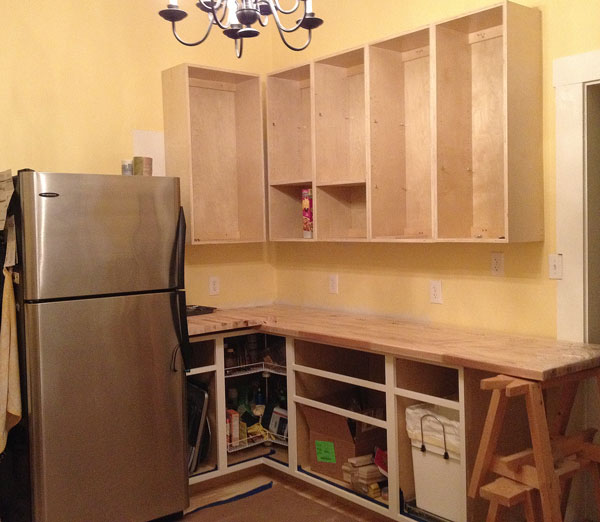
5InSo I screwed the remaining three cabinets in that run to the wall, then to each other. Plus, I hung one wider box next to the refrigerator (that will be a fun mitered frame to make at the corner, and no, that is not sarcasm).

I have one more 42″-tall cabinet to make that goes next to the refrigerator –  but at only 13″ wide (so that it matches the base cabinet, of course), it missed hitting a stud. So that’s another trip to the hardware store for a couple toggle bolts. Plus, there will be a cabinet over the refrigerator.

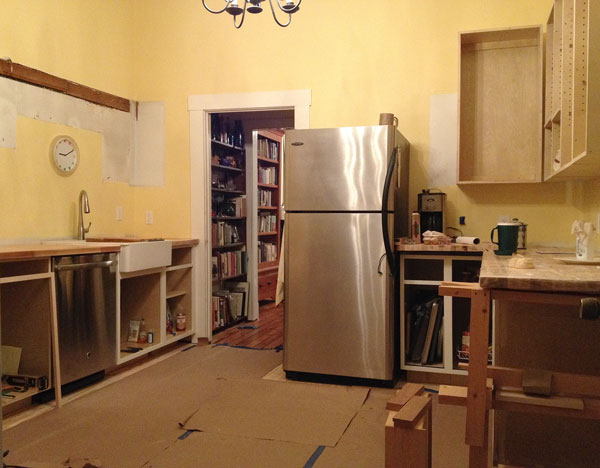
Already, with the cabinets I’ve already installed, I have about 20 percent more storage space than in the old kitchen (plus there’s still the two cabinets to make and install on the interior walls). So this brings me to my conundrum: Should I even bother to make cabinets for over the sink? I quite like how airy and open it feels without them, and it makes the room seem a good deal larger. There’s also the consideration of not having to deal with attaching them to a masonry wall…but there’s a masonry wall to repair if I’m going to leave it exposed; I count it as a wash.

So I guess while I decide, I’ll get started on what scares me most about this entire project: installing the drawer slides.

overall


Posted in Uncategorized | 25 Comments