

Among the more time-consuming (and eye-straining) tasks in preparing Peter Nicholson’s “Mechanic’s Companion” for publication has been digitally removing the “foxing” from the 175-year-old pages. It’s a balance of taking out the staining while simultaneously rendering the text legible in black and white, with enough contrast to “pop” off the page but not so much that the fox ghosts show through.
Foxing (apparently so-called after the red/brown foxy color of some of the stains*) is a common problem in vintage books, and there is no one explanation for its cause. The American Institute of Conservation’s (AIC) site says there are “currently three major explanations” with a fourth one proposed: “a) fungal activity b) metal-induced degradation, and c) multiple causes.” The proposed cause – which must mean it’s not yet accepted – is “general discoloration of paper caused by the interaction of moisture and cellulose.” (There is – and I find this fascinating – a Classification of Foxing, including “Bullseye” (small, round spots with a dark center surrounded by concentric rings) and “Snowflake” (which is mostly what I’m dealing with – “spots with scalloped edges and/or irregular shapes which can measure inches across”).
There are numerous treatments to arrest and reverse the process on the paper, but I’m going the electronic route; like all good things, it takes some work. Every page presents a different stain pattern, distribution and color, and thus I’m attacking them one by one rather than writing an “action” (basically a script that applies the same steps to every file in a folder). I tried that early on, but applying the same criteria to every page simply resulted in different problems that then had to be separately addressed.

Raw scan
And of course, I want to maintain as much detail as possible on the gorgeous engravings – so I can’t remove too much gray, or else they won’t be nice and crisp.
I’m about done with the page cleanup, and will soon be setting up a template to get started on the layout – but it will look a bit like this, though with more subtle transition from the placed images to the page:

* The AIC site mentions the term was first used in 1848 and refers specifically to Reynard the Fox – which would make sense; he’s a troublemaker!

 First, I’m not yet committing to an on-sale date for the classes below (with one exception – the Dovetailed Silverware Class at Lie-Nielsen Toolworks), but it will be soon – before the end of April. (I’ll announce the go-live date/time here first, with at least two days’ notice.) I’m currently navigating the setup of my
  Dovetailed Shaker Step Stool – July 28 & 29
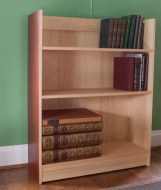 Boarded Bookshelf – August 25 & 26
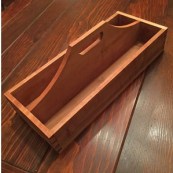 Build a Dovetailed Silverware Tray, Sept. 8 & 9 (Open for Registration)
 Make a Coffin-Shaped Bookcase…for use Now & Later, Oct 20 & 21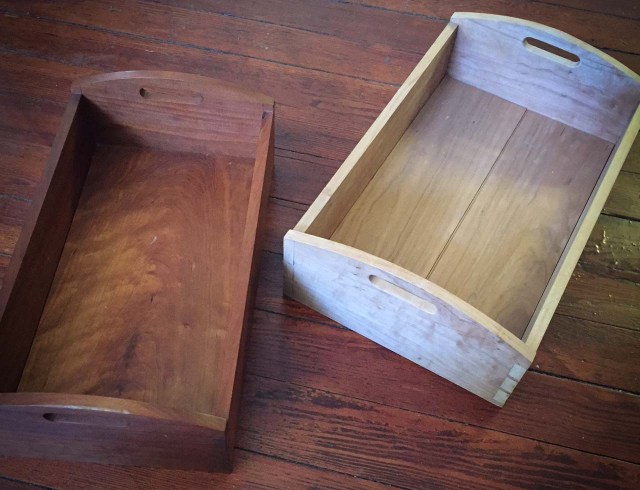

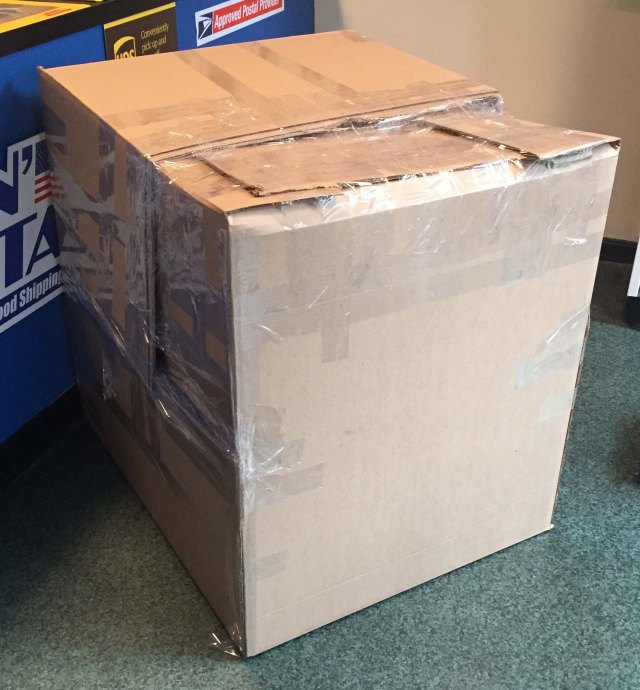 I learned a valuable lesson today through shipping a Dutch tool chest to its new owner: Pack things in the smallest-possible-but-still-safe configuration. And build a crate – that would have been easier, and likely less expensive. And it sure would have looked better.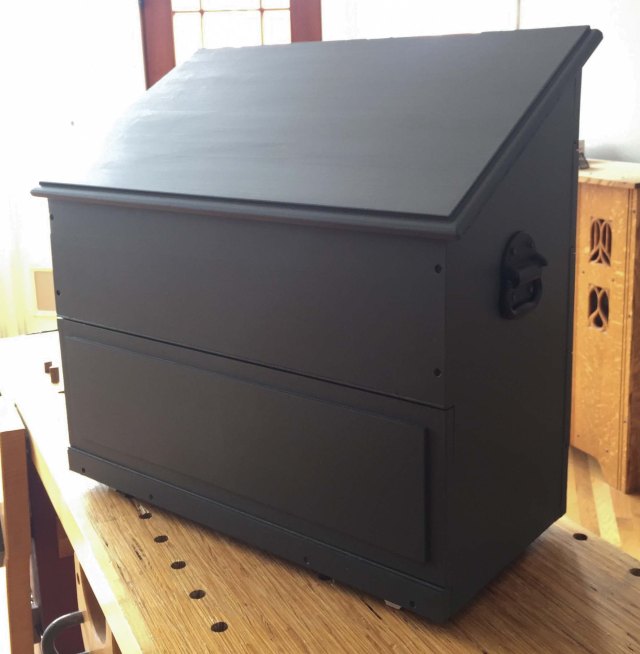


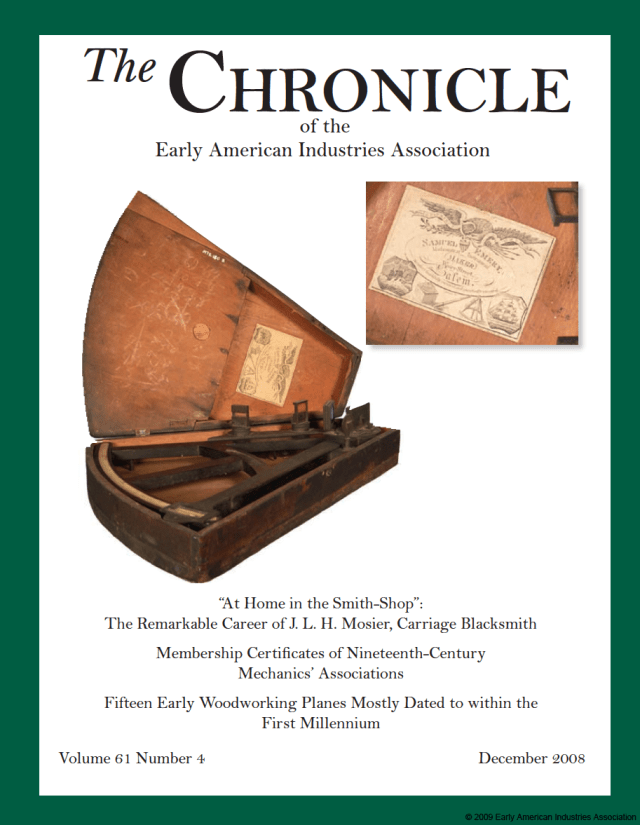



 As a freelance editor without a steady income, what better decision than to hire tiling professionals for the bathroom renovation, I ask you? I’ve tiled a couple of bathrooms myself, after all, and they turned out pretty nice. But one was just the floor; the other was a shower with two tile walls, a glass panel on a third wall and a glass door, with a one- piece marble curb (and the floor). My neighbor loaned me his tile saw.

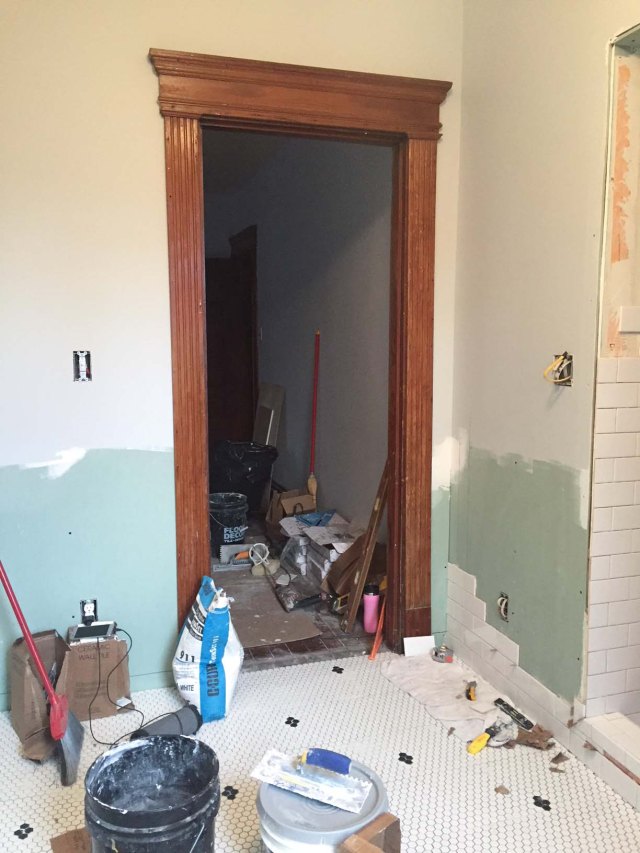
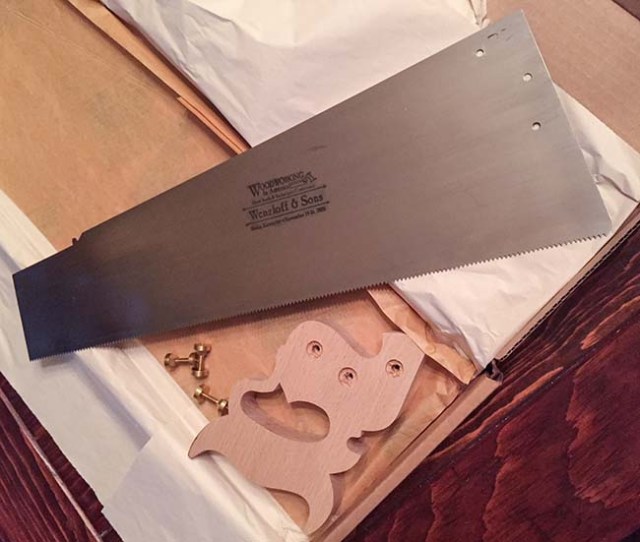 So…that bathroom tiling job I’m fervently hoping to not have to do myself? (Because my deteriorating knees simply cannot take it.) It will cost a breathtakingly significant amount more than I was expecting. Enough more that I’m finally spurred to sell a few superfluous items in my collec….er, toolkit.
 Rude Mechanicals Press Blog